
Elevado Residence
Silver Lake, Los Angeles, CA
Residential / Addition
Existing: 2,283 SF / Added: 459 SF
Completed
location:
program:
area:
status:
This pavilion-like addition is situated behind an impressive 1913 Craftsman home on a sloping lot in Silver Lake. The goal was to connect the home's living spaces to the underutilized rear yard, which is one story below.
Designing the addition over a century later, we utilized steel structural framing to emphasize the lightness and delicacy of the extension in contrast to the heft of the Craftsman architecture.

When the multi-sliding doors are open, the addition transforms into a covered communal area, extending over the pool.
The addition is modest in scale, increasing the existing 2,600-square-foot residence by only 460 square feet. It’s a flexible, unprogrammed space that connects the clients to the outdoors. When the multi-slider doors are closed, the addition serves as a space with a writing desk and an intimate reading area. Conversely, when the multi-sliding doors are open, the addition transforms into a covered communal area, extending to the pool and yard.

The presence of the addition activates the previously overlooked rear yard.

It is now a vibrant space for relaxation and play within the thriving garden.
Out of admiration, we preserved the home’s facade by creating a literal gap between the house and the addition. This gap renders the two structures entirely independent, connected only by sheet-metal flashing. The separation of the home and the addition makes them more intimately interconnected. The addition doesn't have a rear wall adjacent to the home, leaving the home’s clapboard exterior exposed.

The main stair extends beyond the home and into the outdoor seating area.
The presence of the existing facade within the addition preserves the home and complicates the sense of interior and exterior.
Similarly, the staircase from the house is a cantilevered, wood-clad “extrusion” that projects into the addition without touching it. The staircase hovers lightly over the addition's floor, emphasizing the delicate interplay between the two independent structures.
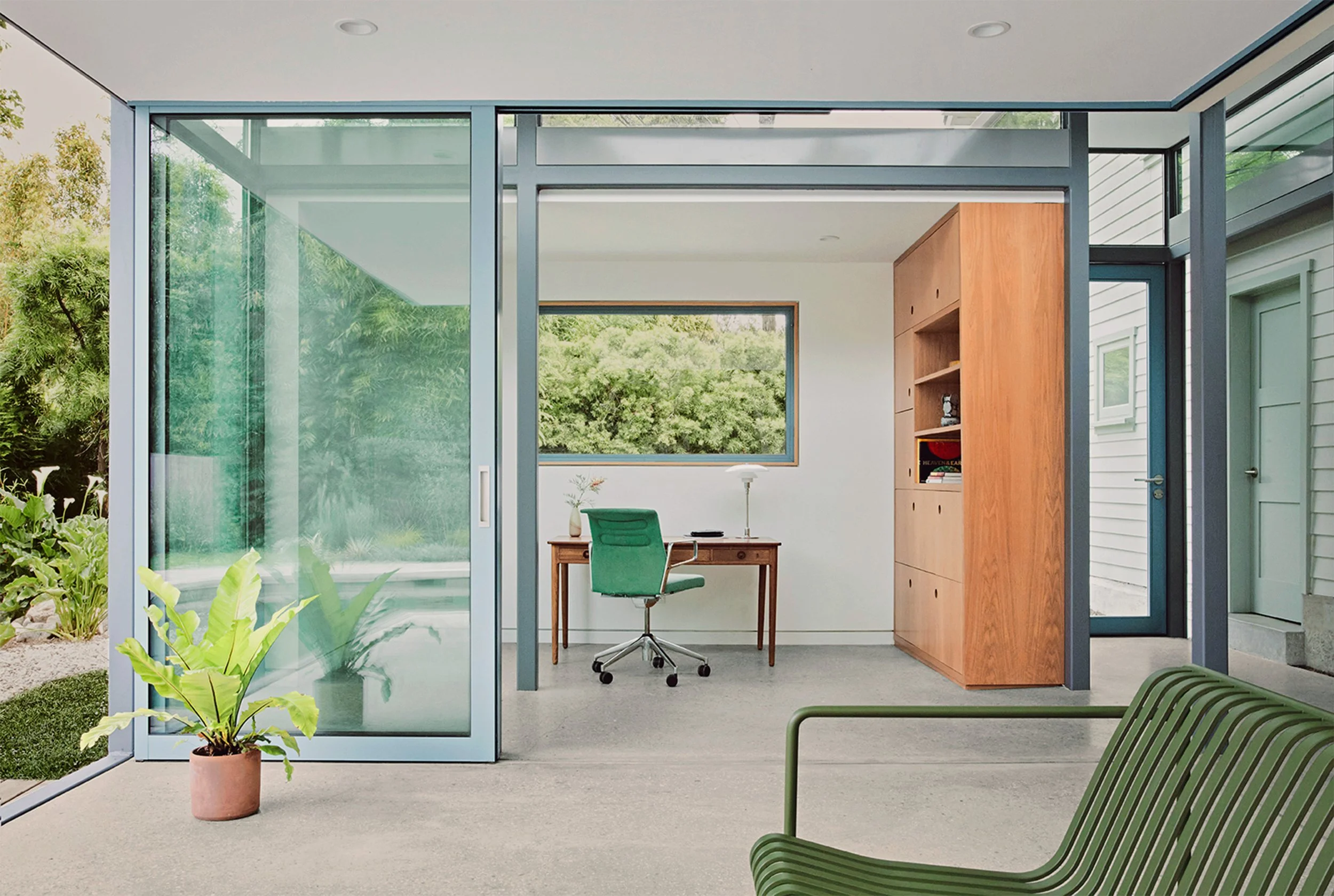
In addition to the covered outdoor patio, the addition serves as a space with a writing desk and an intimate reading area.
Two axes bisect the plan at right angles. These axes organize circulation, guiding movement between the house and pool and across the addition. The roof is elevated along this axis to provide the necessary head height when descending the stairs from the existing residence and to create a clerestory that accentuates the colonnade.
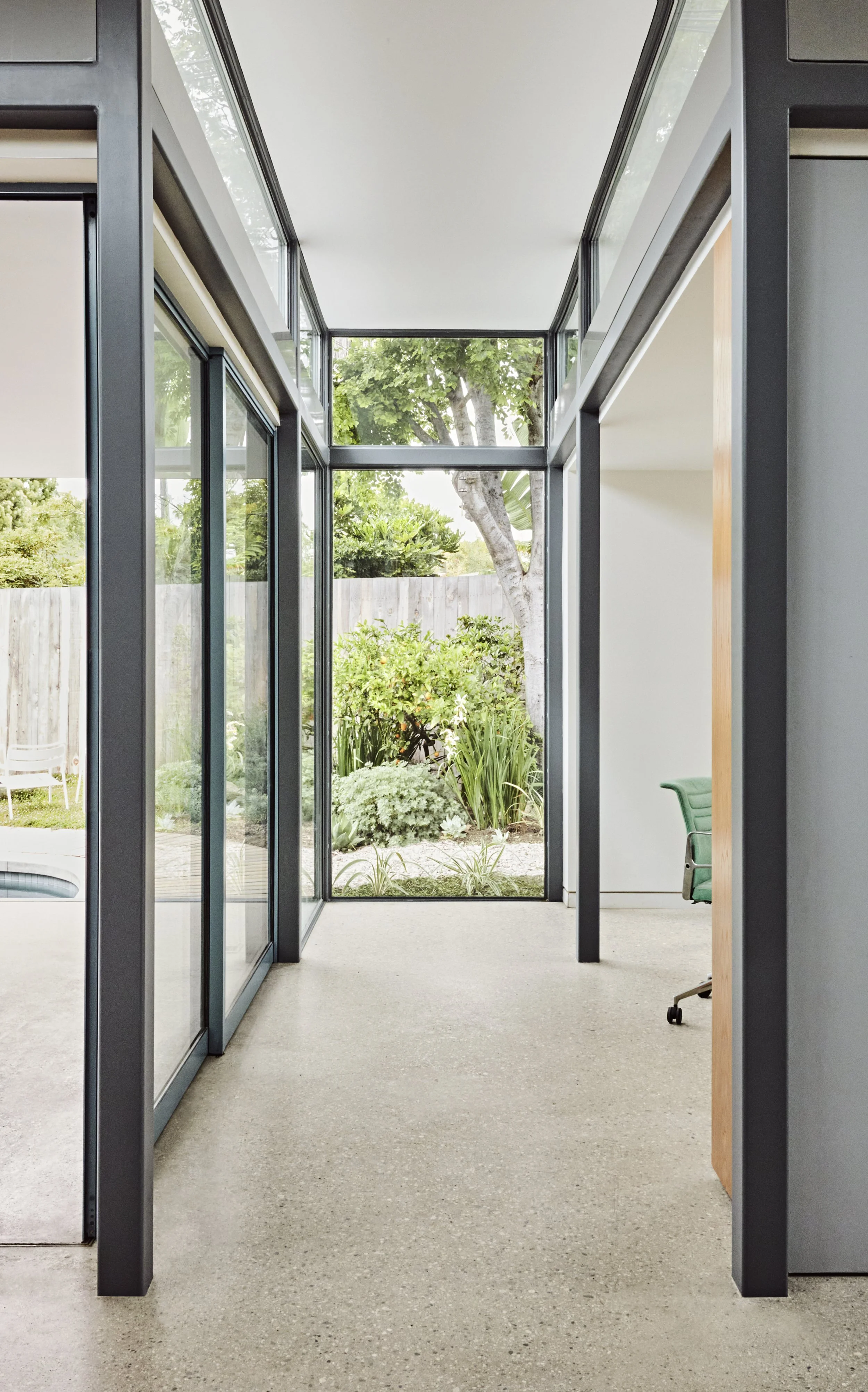
Two axes form a colonnade that guides movement and extends the circulation into the home and yard.
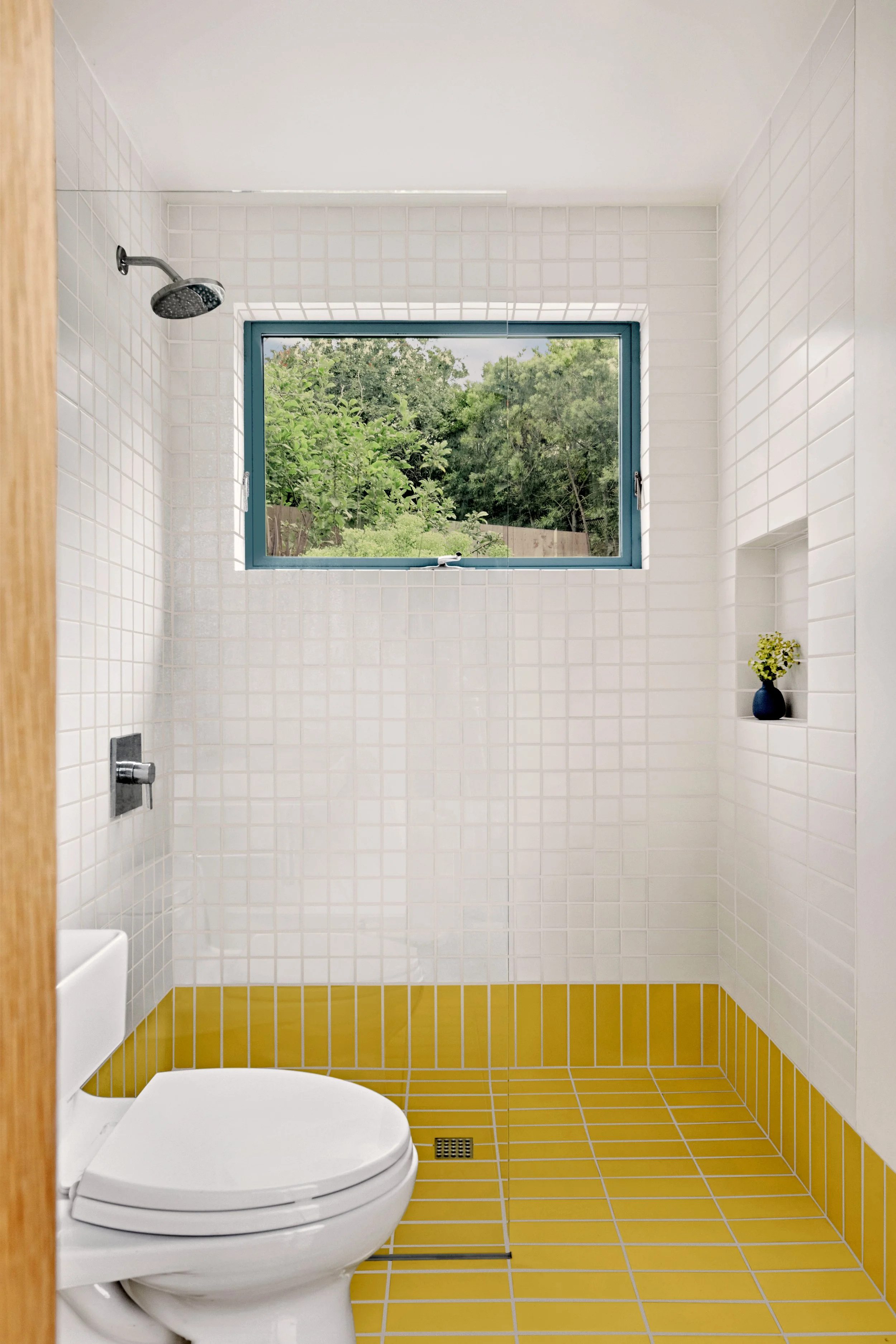
The bold color-blocked floor tile, and two tile grids on the wall creates as a bathroom that is simultaneously bold and tailored.
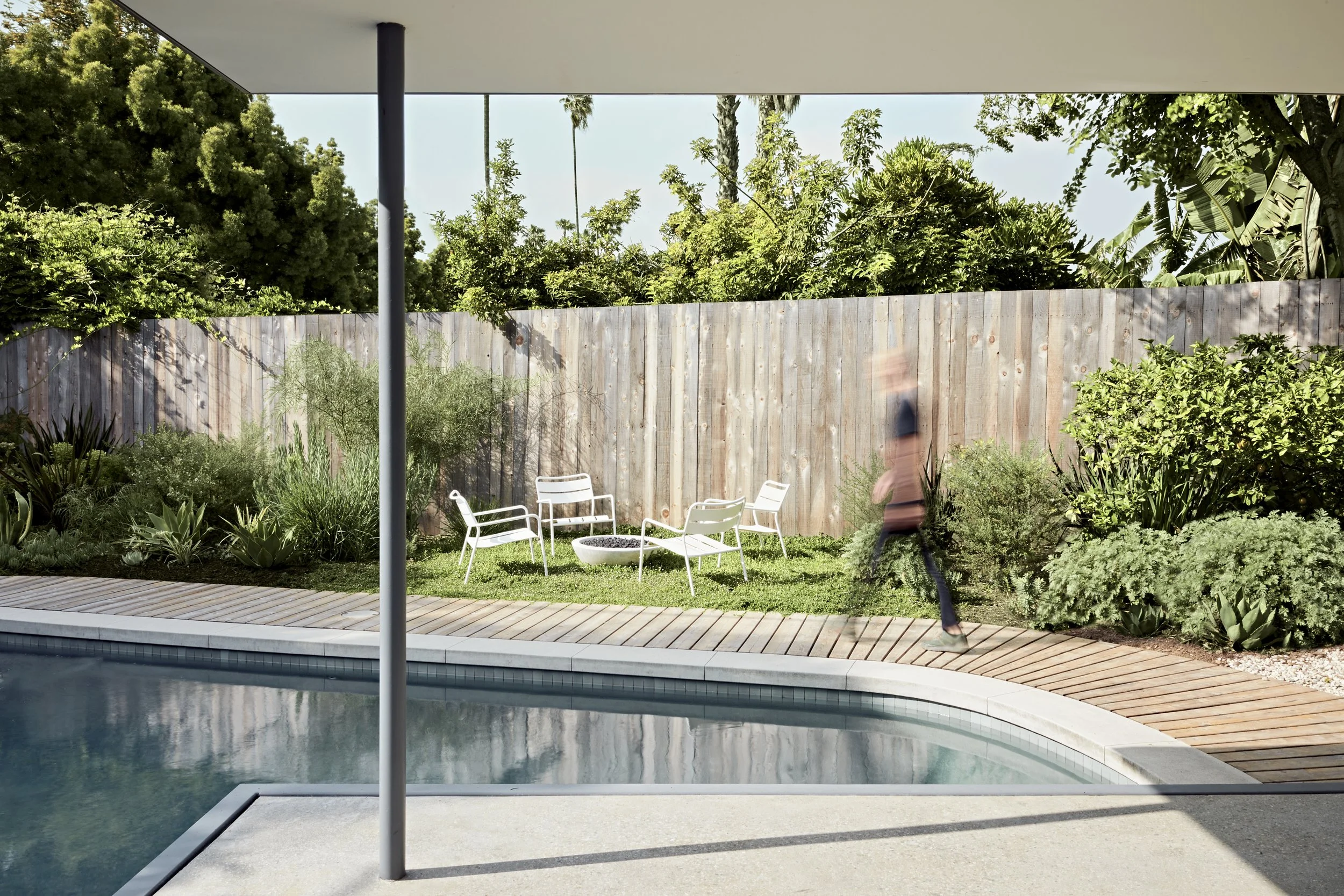
The addition dissolves the boundary between interior and exterior, resulting in a seamless transition from the covered patio to the pool and landscape elements.
The pool and hardscape were designed in collaboration with Steven Fiske, whose landscape design plays a key role in the project.


The delicate structure is surrounded by flourishing vegetation. The light touch of the design gives the sense that the addition is as much a landscape feature as an architectural one.
The integration of building and garden suggests that the addition is as much a landscape feature as an architectural one. By challenging conventional ideas of inside and outside and collaborating across disciplines, the project creates an effortless connection among the home, pool, and gardens.
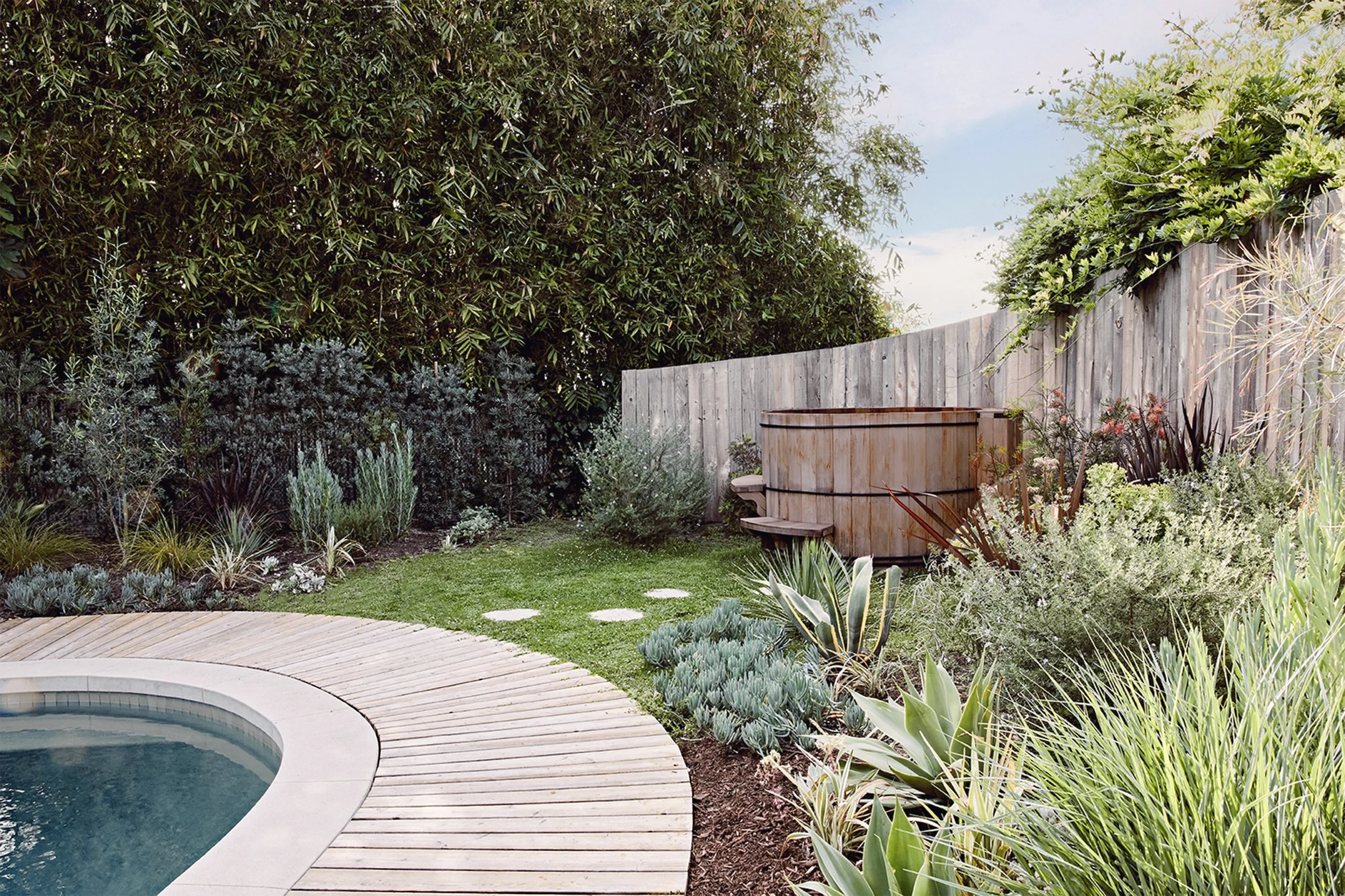
The pools geometry radiates into the garden.

The dense vegetation surrounds the entryway down to the addition and pool.


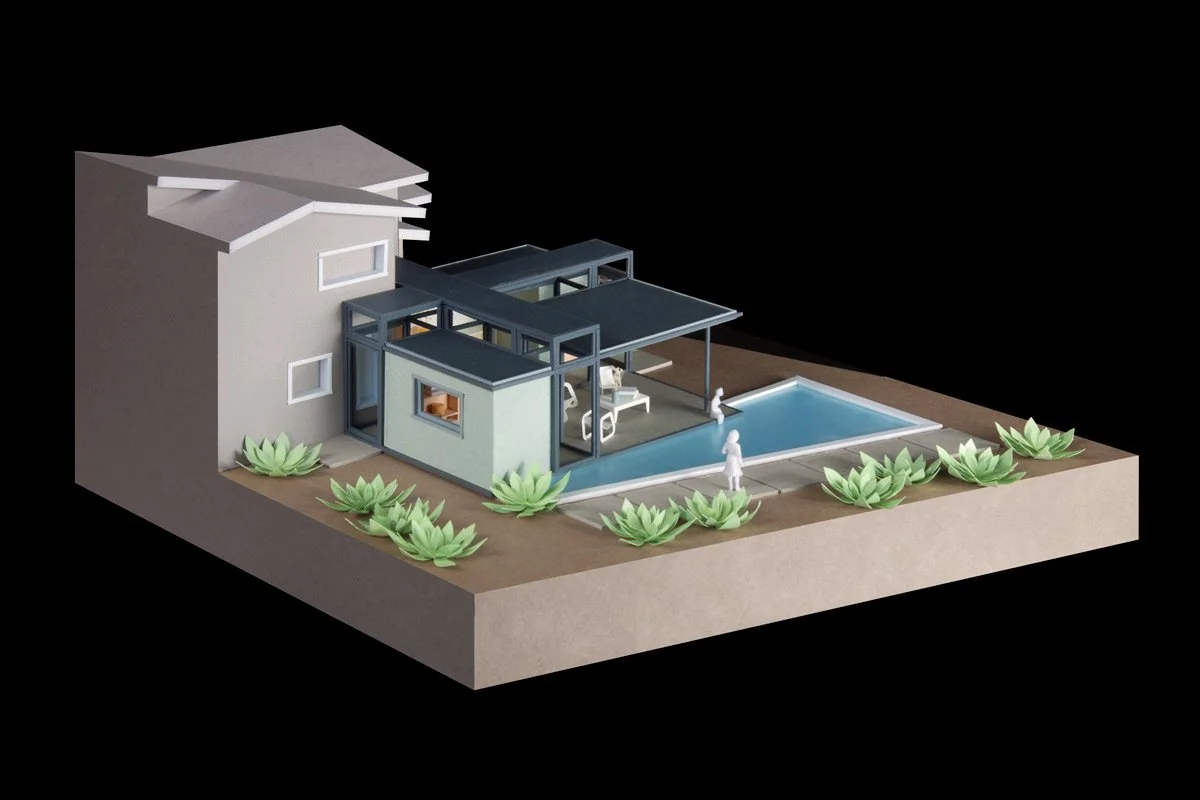

Detailed model showing relationship with the existing house.
We’re always interested in how our process influences design outcomes and typically work with both analog and digital methods simultaneously (sketching, Rhino, physical modeling, orthographic drawing, etc.). The project's limited scope allowed the office to experiment with a solely analog design approach. The addition was designed entirely through sketching and physical models, enabling us to explore a broad range of options that intuitively incorporated material and physical constraints.

Color study of the addition’s paneled walls.


This circulation axis divides the square plan into four quadrants, three of which contain program, while the fourth functions as a void to notch the addition around the existing house.


The roof is elevated along the circulation axis, creating a clerestory colonnade. A clerestory provides the necessary headroom for the stairs from the residence.